







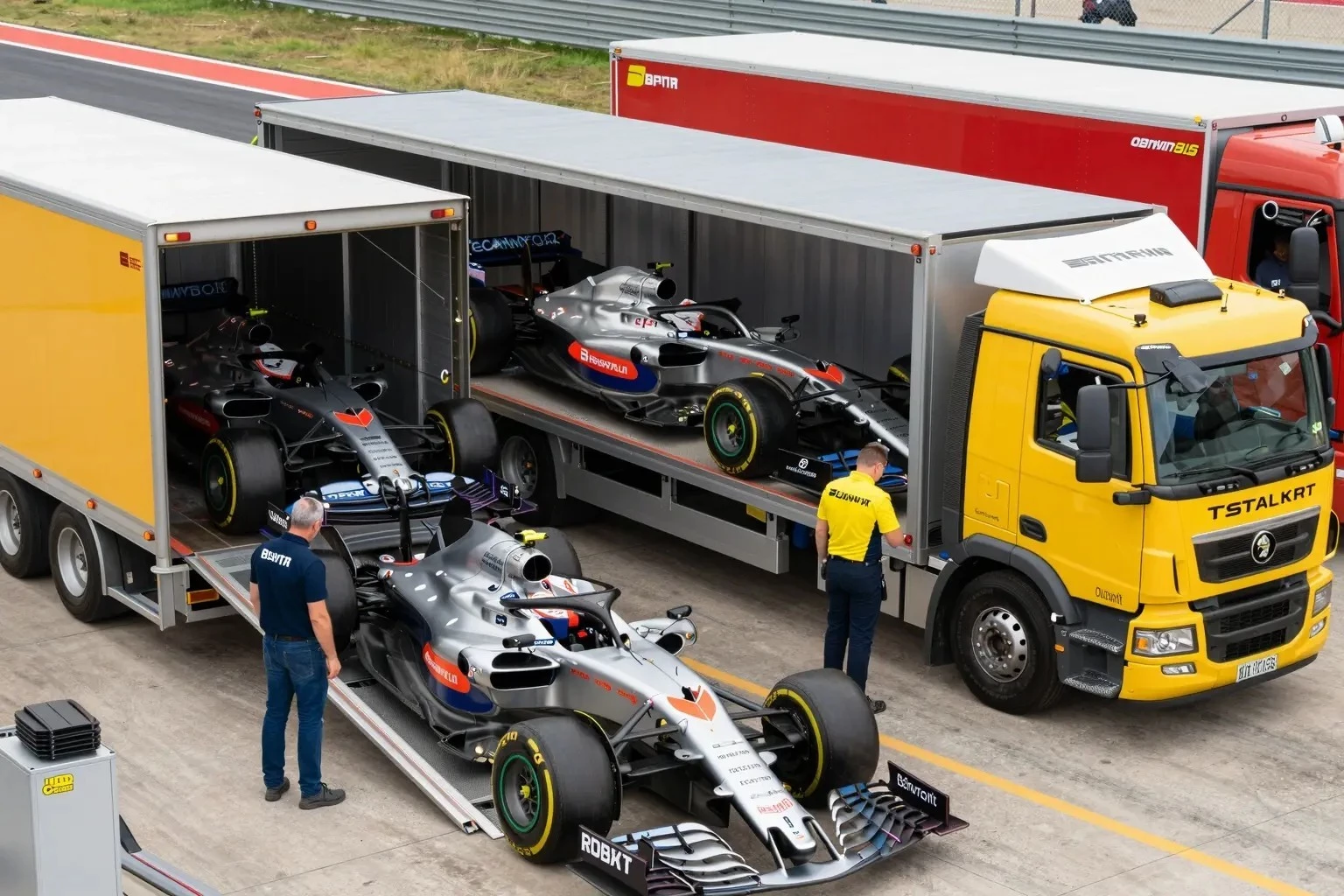
how are f1 cars transported between races
The world of Formula 1 racing is one of speed, precision, and cutting-edge technology. However, behind the glamorous facade of high-speed races and global circuits lies a complex logistical operation. Transporting F1 cars between races is a massive undertaking that involves meticulous planning and coordination. Let’s delve into the intricacies of this process, focusing on key elements such as logistics, transport, shipping containers, and more.
The Logistics of Formula 1 Transport
Logistics is at the heart of Formula 1 transport. Each team must move not only their cars but also a significant amount of pit equipment, spare parts, and support gear across continents. This requires a well-oiled machine that ensures everything arrives on time and in perfect condition.
Modes of Transport
- Air Freight: For races that are geographically distant, air freight is the preferred mode of transport. Cargo planes are used to move F1 cars and equipment swiftly across the globe. Each car is carefully disassembled and packed into custom-made shipping containers that are then loaded onto planes.
- Sea Freight: While air freight is faster, sea freight is more cost-effective and environmentally friendly. For races with longer intervals, teams might choose to ship non-essential equipment by sea.
- Trucking: For races within the same continent, especially in Europe, trucking is often used. Specially equipped trucks transport cars and equipment across borders, handling the shorter distances with ease.
Shipping Containers and Packing
Shipping containers play a crucial role in the safe transport of F1 cars. Each car is carefully disassembled into its core components, which are then securely packed. This ensures that no damage occurs during transit. The process of disassembly and subsequent reassembly at the destination requires precision and expertise.
Team Coordination and Race Calendar
Effective team coordination is vital for the smooth execution of F1 logistics. Teams must align their schedules with the race calendar to ensure timely delivery. This involves coordinating various departments, from logistics to engineering, ensuring that every piece of equipment is where it needs to be.
Customs Clearance and Freight Forwarding
Customs clearance is another critical component. Given the international nature of F1, teams must navigate varying travel regulations and customs procedures. Freight forwarding companies play a pivotal role in managing these aspects, ensuring that all documentation is in order and that cargo moves seamlessly across borders.
Efficiency and Time Management
Time management is of the essence in F1 logistics. With races often just a week apart, every minute counts. Teams optimize their processes to enhance efficiency, ensuring that cars are race-ready upon arrival.
Cost and Sustainability
Transporting F1 cars is an expensive endeavor. Teams are constantly balancing costs while striving to reduce their carbon footprint. This has led to innovations in logistics, such as more efficient packing methods and choosing greener transport options when possible.
Reducing Carbon Footprint
Sustainability is increasingly becoming a focal point in F1 logistics. Teams are exploring ways to offset their carbon emissions, such as investing in renewable energy sources and optimizing transport routes to minimize fuel consumption.
